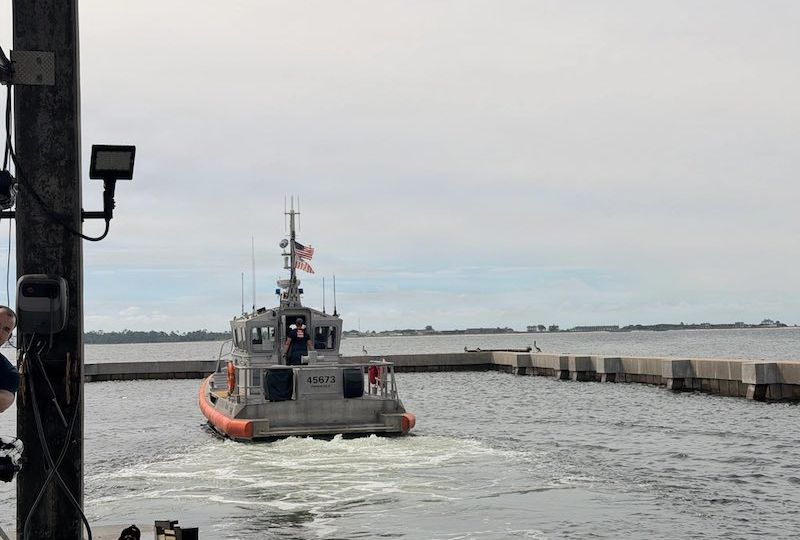


Funding for the Department of Homeland Security ended 40 days ago and the effects on the Coast Guard are mounting.
This marks the third shutdown of this fiscal year. In total, for 85 of the last 176 days—for nearly half the year the Coast Guard has been without the funding necessary to operate and pay people.
Congressional negotiators are working on a deal to fund the Department of Homeland Security with proposals flowing back and forth but no resolution.
Coast Guard exchanges and activities funded with proceeds from sales (nonappropriated funds) continue operations. Employees paid from exchange and MWR proceeds are getting paid.
Coast Guard active-duty personnel are getting paid for now through emergency funds but the next paycheck on April 1 is up in the air.
Coast Guard appropriated fund civilians are not getting paid.
ALA is working with the Military Family Action Network to distribute commissary gift cards to Coast guard personnel. The Coast Guard Foundation and other organizations are providing emergency support, including grants and interest-free loans to assist families during the shutdown.
“Captain Jeff Ferlauto and his team of dedicated Community Support Command professionals continue to flow products and services in support of the vital Coast Guard mission during these challenging times,” said Steve Rossetti, ALA President. “We salute their dedication to the mission and pledge our industry’s support in any respect to help them weather another storm.”
The long stretch of the shutdown has moved the agency “closer to a tipping point,” placing the U.S. at risk of widespread utility shutoffs at bases and exacerbating the USCG’s massive maintenance backlog,” said Admiral Thomas Allan, Vice Commandant of the Coast Guard at a Congressional hearing yesterday.
Allan said in his testimony that there is a “grim uncertainty surrounding active duty not getting paid.
It has prevented the service from paying more than 5,000 utility accounts, putting the Coast Guard’s critical infrastructure in “imminent danger” of widespread utility shutoffs and refusals of fuel deliveries.
It has stalled the processing of more than 16,000 merchant marine credentials, with the backlog growing by 300 per day.
“Every day the shutdown drags on moves us closer to a tipping point.” It takes the Coast Guard two and a half days to recover from each day it is in a shutdown, Allen said, meaning if the shutdown were to end Wednesday, the service would not catch up with bills and other affected activities until July 3.
“In total, for 85 of the last 176 days — for nearly half the year — our service has been without the funding necessary to operate and pay our people, Allen said.”
The latest shutdown has left crews deployed on national security missions unable to get reimbursed for thousands of dollars of official expenses on their government travel cards — a personal debt that is an “unacceptable burden,” he said.
It has also crippled the Coast Guard’s ability to pay its many contractors and vendors, including companies that perform ship maintenance and are increasingly voicing their unwillingness to work without pay.
“What we worry about is that it’s not only a near-term impact, but as we bid for these contracts with these companies in the future, they’re not going to come to the Coast Guard, they’ll go to the Navy, they’ll go to the Marines,” Allan said.
The service has so far incurred more than $200 million in unpaid bills to industry partners, he said. Among them are missed payments for cloud and satellite communications services that threaten to sever vital command-and-control links.